Friday, June 21, 2013

Guilty by Sky Gilbert


Ok, if you are going to read this book I'm going to give you a whole bunch of trigger warnings. It's one thing if you don't want to read explicit sexual content, or kink (including scat); but what I found far more disturbing was the sexual violence and hostility to consent. Regardless of what you hear about the book, if you're triggered by those things even a little bit, please don't read it.

So there's that. I was really excited to read this one as the writer, Sky Gilbert, is a big name on the Toronto gay scene and was one of the co-founders of Buddies in Bad Times Theatre. This is his first novel and I have to say, it's pretty impressive. First novels tend to be overfull and rambling, and in that respect Gilbert shows remarkable restraint. He's also clearly a talented writer; the book was well constructed and I was never bored. I have become obsessed recently with the unreliable narrator, a literary trick Gilbert uses to great effect in Guilty. I honestly had no idea what was real (although I had a pretty good sense of what wasn't).

The story is first person from the perspective of the protagonist, Jack. I read in a review or the blurb or something that it was "stream of consciousness," but it isn't. It's quite coherent, like Jack is just sitting down and telling you a story. The story is that his lover, Cassidy, was murdered (possibly?) and Jack may or may not have done it, and he's not really sure. What makes it fascinating is the way it's told, and Jack's many tangents and asides that give a full and disturbing picture of what makes him tick.

I'm not sure what I'm supposed to get from the book. I think it's important that Jack likes to involve poop in his sex play, and even suggests that Cassidy was simply a representation of this desire, and it's that which he feels guilty about - as if he has conflated his guilt about being into scat into the murder of a person who may or may not actually exist. He is obsessed with the Montgomery Clift film A Place in the Sun, and is obviously drawn to Clift's character in the film, a man who thinks about killing his pregnant girlfriend and is then convicted of murder when she dies accidentally. There are also shades of L'etranger (although at the start of the book Jack explicitly states that he is not like Camus) - in fact, one might call this book L'etranger for the modern age. And honestly a bit of Psycho in there - Jack is always urging us in parentheses to stop blaming his mother.

Toronto, surprisingly, is not a big part of the scenery. I can't remember any places being name checked except Cawthra Park, although there must have been one or two others. It's probably for the best, as I'm not sure the tourism board would want people associating this book with our city.

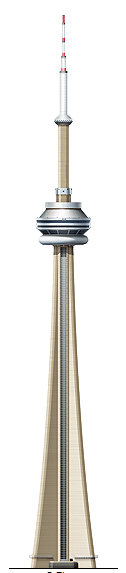
I don't know if I liked the book or not. It's hard for me to dislike a well written, interesting novel, but I found it just so uncomfortable to read because of the hostility to consent (and later, admittedly, because of the graphic depiction of a guy eating another guy's shit) that I don't know if I could recommend it to another person. It's certainly a brave and different book, and art that makes us uncomfortable is probably the most important art. I am utterly on the fence, so I'm going to say three CN Towers out of five.

Friday, June 7, 2013

The Scott Pilgrim Series by Bryan Lee O'Malley: Vol. 5


See previous reviews for Vol. 1, Vol. 2, Vol. 3 and Vol. 4.

Volume 5: Scott Pilgrim vs. The Universe

While this was a strong entry in the series, with a lot of really in depth character exploration for a graphic novel, a couple of things about it were disappointing. First, there wasn't nearly enough Wallace. Where is the graphic novel just about Wallace, is what I want to know. He's awesome! And hilarious. Second, a lot of the action takes place at houses (particularly house parties) and that means less Toronto goodness. There's something so delightful about seeing the places you pass every day being rendered in cartoon form.

Worst of all was that all the progress Scott made towards becoming a decent human being in the last installment seems to be slipping away from him. I'm sure this is typical of 24-year-old men, but Scott just doesn't get it. It's like he just doesn't understand how to relate to the people around him, particularly the women. It's well written/drawn and I'm sure very relateable to dudes Scott's age but I just want to shake his adorable little cartoon shoulders and tell him to smarten up.

This volume may be the one that has diverged from the movie the most so far (ok, I know, it's the other way around). In this one, the evil ex Scott has to fight is actually two evil exes, twins, and he doesn't even fight them - just their amazing fighting robot. Why would they leave this out of the movie??

So far I think the best, most interesting character is Kim, and we got to see a lot of her in this volume, which was great. Another thing I enjoyed was that despite a notable lack of Wallace for the majority of the book, there were lots of great little jokes and funny tidbits. Scott trying to entice the cat back with various questionable food items was my favourite.

All told this volume wasn't the weakest entry, but didn't hold my interest after the last, spectacular one. I'm giving it three CN Towers out of five.

Friday, May 24, 2013

My Darling Dead Ones by Erika de Vasconcelos


It is refreshing sometimes to read stories that are explicitly about women. This novel has no men - well, barely any men - and the ones that are there play miniscule roles in the drama that unfolds. The story follows four generations of Portugese women as they move through life and tell each other their stories. It is, as you can imagine, beautifully written, with shades of Gabriel Garcia Marquez.

There is a family tree at the start of the novel, which is helpful but not totally necessary, as the narrative is clear on who is related to whom, and how. It's hard to describe what exactly happens in the book, as it is mostly a non-linear exploration, complete with secrets and revelations, of the lives of women - and these four women in particular (that is, Helena and her sister Magdalena, Helena's daughter Leninha, and her daughter Fiona) along with Fiona's sister Laura, and daughters Bea and Zoe.

I think you'll know if you like this kind of thing by reading the back, honestly. It's about women and their lives, stories, love and loss, the lives of immigrants. Obviously I eat this stuff up - and I liked that it wasn't overly sentimental - but it's not for everyone.

In terms of Toronto, it doesn't really play much of a part. There are no landmarks mentioned and it doesn't try to capture the flavour of the city at all. It is more of an internal story, in that most of it takes part in the feelings of the women involved and not so much the world around them.

All told, it is a gorgeous story by a gifted writer, and it will appeal to exactly the readers it intends to.

Four CN Towers out of five.

Friday, May 10, 2013

Norman Bray in the Performance of His Life by Trevor Cole


This book will probably make you squirm, if you're the type of person who squirms watching awkward shows like Extras or Frasier. The protagonist (hero is definitely not the right word) of the novel, Norman Bray, is the type of person one would never want to know in real life, but because the novel is about him you're sort of forced to sympathize with him. It's like the more empathetic you are, the more you are going to try to like him, but the more you're also going to be perplexed by his lack of empathy.

The story takes place about three years after the death of Norman's common-law partner, Gillian. Norman is an out of work actor who doesn't really do much with his life but doesn't seem to think he should have to do anything. The bank is foreclosing on the house he inherited from Gillian, and all of a sudden he must find a way to not only pay what is owed on the house, but find a way to support himself financially. The real world does not appeal to Norman, who is constantly reliving past triumphs and reinventing the past in general.

How do I describe this character? Self-involved seems like an understatement. Norman never listens to other people; he barely takes the time to learn people's names. He is constantly inventing the world to make himself look amazing, but he's not really a liar - he seems to truly believe the things he says (the narration is third person but spends a lot of time in Norman's head). He is in extreme denial almost constantly. I think probably if he were real, it would turn out he had some sort of psychological disorder, but I have no idea what that would be. At first I thought he was perhaps supposed to be a sociopath, but I think he would have empathy for other people if he listened to them or was aware of anything beyond himself.

The mystery of the character of Norman, and the outrageous things he believes and does, are what drives the story and keeps it in a strange tension of comedy and tragedy. The other intriguing character in the book is Amy, Gillian's daughter, who reads Gillian's journals and begins to raise questions about her death, and about Norman himself. I love her character, because she is genuine and flawed and pretty much the opposite of Norman, in that she doesn't think enough of herself and is constantly preoccupied with the needs of others.

I read this book in two days. It was fascinating. There is certainly a lot of Toronto in the background - street names and landmarks - but in an unessential sense; it could have been set anywhere. The main setting, really, is the inside of Norman's head, with all its strange and deceptive twists and turns. The book is just perfectly written, hilarious and heart-breaking all at once. I would read this author's work again without question.

I highly recommend this one, you guys.

Five CN Towers out of five