Showing posts with label Friendship. Show all posts

Friday, April 12, 2013

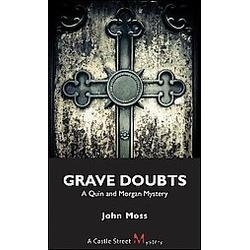
Grave Doubts by John Moss


Mysteries! I can't get enough of them. For some reason, a disproportionate number of books set in Toronto seem to be mysteries; or perhaps it is proportionate, and the majority of all books are mysteries. Could it be? Anyway, I've got no problem with it, because it is by far my favourite genre.

Grave Doubts is part of a series of books about two Toronto detectives, Quin and Morgan. Unfortunately it is not the first book in the series, so I feel like I'm missing a bit of the backstory, but that didn't really affect my enjoyment of this one to a noticeable degree. The book opens with the discovery of two bodies entombed in the plaster of an old house, wrapped in a lovers' embrace, and missing their heads. It is mostly an ancient curiosity until it is discovered that (mild spoiler alert) the old-time-y clothing and accessories are actually an elaborate ruse, and the bodies (and therefore the murders) are pretty new. Which makes it Quin and Morgan's case.

It's kind of a police procedural, but not really, as most of the action centers on the two detectives in their down time. Quin befriends Rachel Naismith, the police officer on the scene, and the two of them strike up a strange friendship with Alexander Pope, the renovations expert called in to examine the crime scene. Morgan, meanwhile, pursues his attraction to Shelagh Hubbard, the forensic anthropologist who examined the bodies, leading me to wonder if these people meet all their friends/potential romantic partners at crime scenes, and what kind of weird consequences that would have for their lives.

The book takes place mainly in Toronto, although it also explores some unlikely parts of Ontario like Owen Sound, and Penetanguishene. The Toronto scenes name check a lot of landmarks and streets, but don't do a lot to really capture the vibe of the city. This is not the book to read if you want to get a feel for Toronto.

I did enjoy the novel a lot. The author made some interesting choices for a mystery, focusing extensively on relationships and intimacy (and I don't mean sex) and really drawing out the suspense during the climax, which lasts about four chapters. I did appreciate the abrupt ending once the mystery was resolved; I think many mystery writers succumb to the annoying cliche of over-explaining what happened, either through a villain laying out their whole plan to the hero (giving them time to be rescued) or by the hero explaining everything to their partner/police chief/spouse after the fact. Moss seems to recognize that in this particular scenario at least, once the who and the how is resolved, the why is as much speculation on the part of the detectives as it is the readers.

Guys, it's worth checking out, for sure. I really enjoyed the characters, and I would definitely read this author again.

Four CN Towers out of five.

Friday, January 4, 2013

Bloodletting and Miraculous Cures by Vincent Lam


This book was quite difficult for me, because it is about doctors, and I have a problem with obsessive ruminations specifically about veins. So while I'm cool to get needles, thinking about (or seeing) what needles actually do affects me very strongly. Normally, I wouldn't have finished reading this book, with its graphic - albeit necessary - descriptions of medical procedures, but it was really, really good. So I read it. But I'm warning you, if you're at all squeamish (particularly about blood and body stuff), this will be a difficult read.

It is a great book. It has an interesting format, sort of part novel, part short stories. Each story is an entity in itself, and could probably exist alone, but the stories follow the same characters through the process of getting into medical school, and then their careers as doctors and their relationships with each other. And they are fascinating.

You know when you read a book, and you think, the author must be a doctor since he writes doctors so well? Or he must have had a relationship like this, because he writes it so well? Well I had that reaction to every single part of this book, including the pregnant woman (I'm pretty sure the author has never been pregnant, although who knows) and both sides of the romantic relationship between Fitzgerald and Ming. Lam has a rare gift for clear, personal writing across genders, backgrounds and emotional states. His characters are very real.

I am actually having a hard time putting into words how I feel about this novel. It is very powerful. The stories are frightening in their truthfulness, and their insight into human nature. This is the kind of thing people are talking about when they say "the human condition". That's what this book is about. The human condition, as seen through doctors.

I wish I could do it justice with my review but I'm having a really hard time. Just...read this book. Really, do yourself a favour and read something good. It's this book. Do it.

Five CN Towers out of five.

Friday, November 23, 2012

The Scott Pilgrim Series by Bryan Lee O'Malley: Vol. 3


See previous reviews for Vol. 1 and Vol. 2.

Volume 3: Scott Pilgrim and the Infinite Sadness

This is the book wherein Scott starts to become more sympathetic. I knew we'd get there! Everyone goes to check out Envy Adams' band, The Clash at Demonhead, and then are invited backstage to chat with them - and Scott faces the third ex, Todd, who is now with Envy. Small (dating) world, right?

This is the strongest book yet. There are some great flashback sequences in which we get some of the history of Scott and Envy/Natalie's relationship, and get to know a little background on the rest of the gang. It's fun to read a series of books again - I love looking forward to the next installment, and it allows you time to get to know the characters and really get engaged with their arcs. Knives Chau was well-drawn in this one; I like how her story is about learning that age makes so little difference, and dudes can be jerks no matter how old they are. And she accepts that some people are not compatible even though they have crazy chemistry. And mostly she starts to figure out how to be her own badass self - I hope to see lots more of her in future volumes!

The battle with the ex is more drawn out and thoughtful, which is great. I love the strong dig at self-righteous vegans, and the surprising complexity of Todd's personality.

Most of all, I REALLY enjoyed the challenge Scott and Todd compete in - getting through Honest Ed's alive. I loved the artwork in this one; the chaos of that place is captured so perfectly! I found it to be a very funny sequence that was purely Toronto; another one I wish had been left in the film.

So yeah, I loved this one. I hope they continue at this caliber. My only complaint: not enough Wallace!

Five CN Towers out of five.

Friday, October 12, 2012

Up Up Up by Julie Booker


You will probably not see a lot of reviews for short stories on this blog, because I have not (yet) found many collections of short stories whose central theme (or at least link) is Toronto. Even this collection is not totally set in Toronto, but most of the protagonists seem to have some connection to the city.

This is not an uplifting group of stories - at least I didn't find it so - but it is not actively depressing, like Katherine Govier's Brunswick Avenue collection. I would say the central theme of Up Up Up seems to be disappointment. The opening story is about two fat women - friends or lovers I am not sure - who travel to Alaska for a camping/kayaking trip. The main character is underwhelmed, and scared, of the glaciers, wanting to steer clear of the falling pieces while her friend/partner longs to get closer and is delighted to see them fall away. Many of the stories deal with women's feelings of inadequacy, sometimes directly expressed through disordered eating/body image issues, and often through unhealthy or questionable friendships.

Each story seems as though it could be a chapter in a much bigger tale. Quite a few of them made me wish it was a book I was reading, and not a story, so that I wouldn't have to leave that character or that situation so soon. I hope Booker will make the leap into full length novels, because I believe she could do it.

I'm not sure if it is a good thing or not that I was so frustrated by these stories. I liked the themes and I found her characters compelling and realistic; this is a writer who knows people. But at the end of each story I just felt like...why not a book? Why do we have only this small window into this character's life?

I think I can recommend this collection though. The stories are great, the themes are not too subtle but do demand some reflection, and there is some humour and hopefulness to the stories sometimes. It was a quick read and I would definitely read this author again; I do hope she writes a novel because I would be all over it.

Three CN Towers out of five.

Friday, August 17, 2012

The Scott Pilgrim Series by Bryan Lee O'Malley: Vol. 2


Volume 2: Scott Pilgrim vs. The World

This second installment is a little meatier than the first. We get some history on Scott and how he started playing music, and how he met Kim back in high school. Some of the characters start to take a clearer shape.

The plot of volume 2 is that Scott has to break up with Knives now that things seem to be in a kind of dating-type arrangement with Ramona. Scott is still a bit greasy and definitely spineless, running all around as if he could prevent the various people in his life from knowing about each other or about his relationships. Knives takes the breakup pretty hard. When she sees that Scott is dating Ramona, she kind of flips out, cuts and dyes her hair, gets a cool scarf, and battles Ramona in the Toronto Reference Library (a scene I desperately wish had not been left out of the film).

Scott also has to fight evil ex-boyfriend number two, Lucas Lee. And he gets a phone call from his ex, Envy Adams, asking him to come open for her much more famous and awesome band.

Every crappy thing that happens to Scott is pretty reasonable karma in my opinion. But despite having a not-totally-likeable protagonist, I really like this series so far. I continue to be delighted by the attention to detail in the backgrounds, not just because of the wonderfully accurate Toronto scenes but also because there's funny stuff that you might not notice unless you look for it. I am not really a comic/graphic novel person, so I'm not sure what's normal or whatever, but I really like O'Malley's quirky style. I recommend this series (so far!).

Four CN Towers out of five.


See my review of volume 1 here.

Friday, April 13, 2012

Fauna by Alissa York

Is any novel not about redemption? Or is it just the ones I'm reading lately? Anyway, this story is about six people and their relationships with each other and with animals. Which is pretty much the simplest way you could put it, but it really does the book no justice.

The majority of the novel is set at a small house in a junkyard on Toronto's east side. Guy lives there and runs the company, which is vaguely related to fixing cars, or towing them or something. Stephen is his live-in employee who is suffering from PTSD after returning from a six-month tour in Afghanistan. They have attracted a young runaway, Lily, who camps out in the Don Valley with her big Newfoundland cross, Billy, and marks her days of freedom with notches she cuts into her arm. She rescues birds who have flown into the big glass buildings of the city and buries the dead ones in Guy's backyard.

There's Edal, a federal wildlife officer on stress leave after one too many animals suffocates while being smuggled through customs; Kate, a physiotherapist for dogs who is coping with the loss of her partner; and Darius, a disturbed young man hell-bent on ridding the Don Valley of coyotes. 

The novel is really a collection of origin stories; nothing much actually happens in real time. It's a pretty interesting look at how our past shapes us, of what families are made of, and of the old wisdom of being able to take the measure of a person based on how they treat those who can't fight back. Guy takes them all in, this extended family of weirdos with their baggage and quirks. It's very sweet.

I was worried when I first started reading that there would be a lot of heartbreaking animal deaths in this book. Animals getting hurt is a big trigger for me, even fictional animals. But apart from some descriptions of the smuggling early on, and some later talk about killing coyotes in cruel ways, it was relatively painless. It is really about the human drama, although there are some intervals where we see things from an animal's point of view, which is kind of cool.

I thought the author made great use of Toronto as a backdrop - the semi-wild Don Valley is a nice contrast to the usual Toronto stories set in the hustle and bustle of downtown. It also introduces the theme of living alongside the wilderness in modern times very well. As Canadians, our collective subconscious remembers our history as fur traders, the wild frontiers and the winter hardship. There were shades of that here, of how much more like these animals we are than we would like to believe.

The book is beautifully written. It tells some very sweet, very sad stories, and the tone doesn't really become hopeful until probably the last page (maybe even the last sentence?). It builds nicely though, and the characters are easy to sympathize with. I wished there was more to it - I wanted more actual action, more conversation even. I felt like a lot of things could have been edited down to make room for the development of that hopeful tone, to emphasize the point where things started to turn around, and to build more of the link between the characters.

That said, I did like it and it was an engaging read. Four towers out of five.


Friday, February 17, 2012

Cat's Eye by Margaret Atwood


I love Margaret Atwood, but I actually haven't read a lot of her work. Cat's Eye is not a book I hear people talk about much; however, I found it to be, of her books I've read, the one that most clearly illuminates a feminist lens, and deals with the problematic issues of femininity and female relationships.

The story is about Elaine Risley, a painter who returns to Toronto in middle age for a showing of her work. Her weekend is cut with remembrances of her childhood, moving to the city with her strange (to others) family after early years of basically living in the wild (her father is an entomologist). Elaine has a brother, but has had no relationships with or experience of girls.

Through her three new friends, Carol, Grace and Cordelia, Elaine learns the ropes of femininity and the expectations of her sex through play, as little girls do. They do things like cutting out pictures of women and household items from the Eaton's catalogue and arranging them into scrapbooks, and playing with paper dolls of movie stars. But they also enforce a strange and arbitrary girl code that will be familiar to most girls reading, regardless of age; Cordelia makes up rules and standards that only she can see, but that Carol and Grace blindly enforce, and Elaine, longing to be loved and accepted, has to follow. She develops neuroses and bizarre fears, and is treated with increasing cruelty by her friends, but continues to return to them.

I can't describe much more of the plot because I feel like I can never do it justice. Atwood creates a very, very real girl world long before Mean Girls but similar in scope; an insulated world where no matter how bad things get, the worst thing would be to be cast out. The way Risley's half-remembered childhood influences her construction of herself, and her art, is heartbreaking; Atwood creates strong images and symbols that slowly begin to weave themselves through every aspect of the painter's life. Supposedly this is Atwood's most autobiographical novel ever, and of course it is - this could be any woman's life. The only thing that sets most of us apart from Elaine is that we grow up into the girl world; we learn the rules a little sooner.

The setting of Toronto is seen with cynical eyes. Post-war there is nothing going on; characters are constantly remarking on the lack of interest they have in the place. In the present day (the late 1980s) story, Elaine wanders around downtown and retraces her old steps, but the city itself still seems dreary and stale. The main character's relationship to the city and the period of her life when she lived there is a strong element in the novel, but this book is not exactly a tourist brochure for Toronto.

This is a story about memory and the construction of self; about women and their relationships to each other; and about loss. It was incredibly moving, but mostly just real - I think that for me, that is Atwood's greatest strength: her books are real talk.

I give this one five CN Towers out of five:

Friday, January 6, 2012

The Scott Pilgrim Series by Bryan Lee O'Malley: Vol. 1


Confession time: I saw the movie before reading any of the graphic novels, which I realize makes me a horrible person, and I apologize.

Volume 1: Scott Pilgrim's Precious Little Life

This (very brief) volume introduces us to the main players: Scott and his very young girlfriend Knives, his band, his roommate Wallace, his sister, and the intriguing love interest, Ramona Flowers.

The plot is basically this: Scott, who is in his early 20s, is (rather chastely) dating a high schooler (Knives). They spend most of the book hanging out and going to thrift stores. Scott seems to enjoy listening to Knives chatter on about the high school drama in her life. Can I just say: I never want to date someone in high school. Besides the obvious creep factor (and it's worse for me than for Scott Pilgrim - I'm 27), I just am so glad that drama-filled part of my life is over! The only thing worse than high school drama is hearing about someone else's high school drama.

Anyway, Ramona Flowers, whom Scott has not met, starts appearing in his dreams. Then he meets her for real. They start hanging out/dating, and Scott has to not be an asshole and break it off with Knives - oh and Ramona has a bunch of evil exes that Scott has to fight. What? Yeah, it's a comic book.

I liked it. I thought Scott was a slimy douchebag and am still confused as to whether we're supposed to sympathize with him. The other characters are cool though, and I like the attention to detail in their clothes and hair. And Toronto is featured prominently and surprisingly accurately in the background. Some places we've seen so far include the stairs to Casa Loma and the Pizza Pizza at Bloor and Bathurst. Cool cool.

Four CN Towers out of five


My review of Volume 2 coming soon...

Friday, December 9, 2011

The Secret Mitzvah of Lucio Burke by Steven Hayward


The first time I visited Toronto as an adult, without my parents, was about four years ago. My good friend Matt was living here at the time, in a house on the edge of Christie Pits. He met me and the friend I was traveling with at Christie Station and we walked through the park, down into the pit and up the other side. It was February then and so it was difficult to get an idea of the park, but Matt pointed out where everything would be when the snow cleared: the playground, the community garden, the baseball diamond. He told us about the riot on the baseball field that had happened in the summer of 1933; anti-Semitic rabble rousers had showed up to a baseball game with a Swastika flag, and the largely Jewish audience and roster confronted them, the fight spilling out on to Bloor Street.

I already felt a sort of personal connection then, however distant, with this book when I picked it up, because it deals with that same riot, building a large and detailed history around it so that the baseball game itself doesn't start until about 20 pages before the end of the book. The story itself follows a few of the key players through a few days in their ordinary lives in Toronto, 1933. Ruthie the Commie, an amazing and impressively written character, who knows that her looks keep her in employment at the fur store and struggles with the ethical dilemma of living as someone who benefits immensely from capitalism and the beauty standard, while trying to organize a walk-out among the wage slaves of the Spadina sweatshops. Lucio Burke, a not-quite-Italian, not-quite-anything-else teenager who is in love with Ruthie, and whose longing to belong somewhere is maybe the most pervasive unarticulated theme of any novel I've read. Dubie Diamond, obsessed with Darwin, who cuts off his own finger to speed up his evolution.

Obviously this is a character-driven story, and sometimes I found it a bit difficult to keep up; most of the time the author deals with three generations of each family, and there are lots of backstories and histories interspersed throughout the narrative, so at some points I kind of lost track of who was related to whom. I should have made myself a chart.

What I loved so much about this novel was the way Hayward covers so many issues without even mentioning most of them. This book deals with themes of race, war, politics, power, democracy, adolescence, belonging, family, religion, faith, immigration, mortality and multiculturalism, but I didn't actually realize it until I had put it down. I have never read an author who can so expertly grapple with heavy subjects without letting the story slip away from him. I wasn't spellbound throughout, but I was never bored, and I never felt preached to.

This is another book that puts Toronto front and centre - it literally could not have been set anywhere else. I was glad to read it now because the Toronto of the 1930s is not something I am familiar with at all, and it was cool to read about the garment workers of Spadina, the knife salesmen in the St. Lawrence Market, and the old College streetcar. Most of the characters live on Beverly Street (one of them buys a house there for $500 cash!) and a couple live on Clinton Street at College (Little Italy seems to be a popular place to set Toronto stories). Of course Christie Pits plays a big role, especially near the end, and there is a big baseball scene set at Withrow Park - which I read on the streetcar just as the robotic voice announced: "Next stop, Withrow Avenue.". The story definitely has a very Toronto flavour, and it was fascinating to see the struggles of early multiculturalism, as well as many burgeoning movements like Communism and (I think I saw it!) feminism.

In case it isn't clear, I adored this book. I highly recommend it to anyone who loves a good story, but especially to those interested in the everyday life of Jewish and Italian immigrants in 1930s Toronto. I promise you won't be disappointed.

Four CN Towers out of five.


Thursday, November 24, 2011

Holding Still For As Long As Possible by Zoe Whittall


When I got around to reading Catcher in the Rye, I was already 23-ish, and I kind of hated it. But really I had the sense that I was reading it too late in life; that you can get a lot more out of it if you read it as a teenager. All those feelings of rage and isolation are so much more relateable.

I say this because while I enjoyed Holding Still, I feel like I might have enjoyed it a lot more had I read it about five years ago; and I would be hesitant to recommend it to anyone who is not in their early twenties. It captures so perfectly the feelings of those years, at least for a specific set of twenty-somethings: the drama, the sexual exploration, the sometimes self-imposed poverty, the longing to connect to something bigger than oneself.

The characters in Whittall's novel live in the neighbourhoods my friends and I live in; the downtown Toronto neighbourhoods that consist of gorgeous old buildings divided into apartments, secret gems in areas that are rapidly turning into condo forests. Gentrification is an ever-present background character in this story.

The story itself is more like a bunch of stuff that happens in the lives of some people. It's interesting and engaging, but not totally traditionally story-shaped. People get together, break up, hang out, think about going to class or work or back home to visit their parents. All the characters seem to have a very fluid sexuality, which is really cool; gender identity does not appear to be a barrier to any of their relationships. They communicate through text messages and hang out at odd hours of the night. They probably don't think that they are hipsters. Every one of them seems like someone I know.

What I really liked was how Whittall dealt with her trans character; it came up at the beginning that he was trans, and then it was not mentioned again. He had a regular life like every other character. This is positive representation: when it's not such a big fucking deal. I liked it very, very much.

The city was used well as a backdrop to the story, and I always really like reading scenes set in places that I know. The Drake came up, and the Beaver Cafe (super cool since I know a guy who works there). One pivotal scene takes place at an intersection about two blocks from my place. One character who is a paramedic works out of Toronto Western Hospital. Very very cool.

I did like the book a lot; I just found it hard to get emotionally invested in characters with problems that I already probably spent too much time and energy on in my own life just a few years ago. I do highly recommend it for people in the 19-24 age range, especially those looking to read about non-hetero people who have regular person problems and aren't tokens or designated sidekicks.

I give it three out of five CN towers.